15 Must-Know Factors You Need to Consider Before Buying an Air conditioner
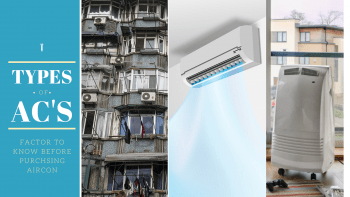
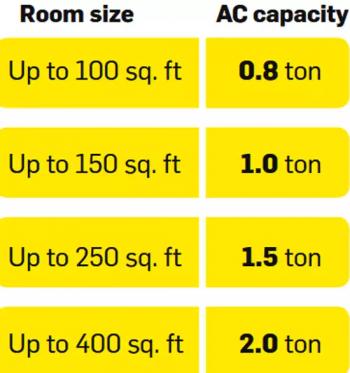
In the changing era of technology and increased global temperature, Air conditioning is one of the most essential appliances that every household should have. But how do you decide which Aircon is best for you? For a buyer, this is the most difficult thing to decide. If not decided wisely, you may regret purchasing the air condition soon. Making this simple, Aircon Servicing Singapore company has created a helpful quick guide you need to check before appearing at the air conditioner store. #Important factors to be considered while purchasing Air Conditioner 1. Types of Air conditioners Brainstorming and knowing about your requirements is the first thing that should be done before purchasing an Aircon. There are several types of Aircon available in the market. All have different requirements and features. You should be aware of it, so that you may not get confused about which one to buy at the store. Below is most used Aircon types listed: Window Aircon: If you have a room with a window, you may think about installing the window Air conditioning system. However, it is a good idea but there are some pre-requirements you should know before finalizing your decision. Window Aircons needs more space to fit. Your installation officer may ask for your permission to make windows large for installation. At present Most of the household use window Ac. It will be more efficient if your window is in the middle of the wall. This will help air to go unanimously on both sides. Split Aircon: Those rooms who have no window should go with split AC’s. Split Ac will be installed on the top of your wall. This requires less space than the windows Aircon. Also, it looks good on the wall more than larger window Air conditioners. Companies nowadays also tend to provide advanced features in split Aircon to make them more lavish. 3. Portable Aircon: A few years ago, a new air conditioning system called portable Aircons came in the market. They were made for small rooms where no large window and split Aircon can be installed. Portable Aircon are small and can be installed anywhere and shifted when needed. Portable Aircons are best to use in small rooms. Several kinds of other Ac’s such as Central Air Conditioners, Hybrid Air Conditioners, Mini-split Air conditioner, Portable Aircon, inverter aircon, non-inverter aircon, etc. are also available in the market but you should not be puzzled with your Aircon requirements and needs. 2.Tonnage Tonnage can be defined as Aircon’s cooling capacity. If you purchase an air conditioner with less tonnage but you have a bigger room, it will directly increase your monthly electricity consumption. Also, it will not cool the space properly due to less tonnage. Similarly, if you purchase an AC with more tonnage than needed it will make you feel resting on the north pole. Here is a simplified solution for your tonnage requirement decision: · With room size up to 100 sq. feet: Buy 0.8ton Ac · With room size up to 150 sq. feet: Buy 1ton Ac · With room size up to 250 sq. feet: Buy 1.5ton Ac · With room size up to 400 sq. feet: Buy 2ton Ac Must Read this Article on How much air conditioner capacity do you need for your home for detailed information about tonnage. 3. Size of Aircon The size of Aircon is an important factor to keep in mind while purchasing an air conditioner. Window Air conditioners are a bit larger than split Aircon. House owners with small Rooms should consider that Aircon which needs less space to install. Portable Aircons are made for this purpose only. Big size Aircons can be installed in big rooms without any hassle. Also, it will not give the room any bad look. But if you try to install big sized Aircon in a small room, your room space, as well as looks, will be affected. The increasing number of windows in the room increases the heat. Apart from this, the size of the room, number of people living in a room, wall facing the sun, stuff and electric appliance in the room also emits heat. You should get yourself clear about all these points before making a decision. 4. Condenser The expected working life and capacity of the Aircon is decided by the condenser and coils used in it. There are two types of condenser are being used in Aircons. The first one is Copper condenser and the second one is Aluminium condenser. Remember that Aircons are very technical in making so they need extra care and service. Aluminum condensers are cheaper than the copper condensers. But you may actually need to pay more for maintenance if your AC has aluminum condensers in it. Aircons with Aluminium condensers have a short life expectancy. It will be a good idea to go with copper Condensers. They are a bit costlier than Aluminium Condensers but have more life expectancy. The copper condenser will give you more cooling with low maintenance costs. 5. Power consumption We all know that Aircons consumes too much power. So, power consumption is a must-watch factor before buying an Aircon. Every year NEA (National Environment Agency) changes the green tick ratings of Aircons based on their quality and performance. Higher tick rating means they consume less electricity. Low tick rating means aircon will use more power to work. It is not a great idea to purchase a low-cost aircon which uses more power to work. This will increase your electricity and maintenance costs every year. So Aircon Service Singapore company, MCL suggests you go with the high tick rating Aircons. 6. Brand Obviously, if you haven’t listened to the name of the Aircon brands in Singapore before. You won’t feel confident about Buying that Aircon. So choosing an Air conditioning system that is from a highly credible Brand is a safe. This gives a feeling and confidence about the quality of the air condition. Also, it assures you that if something goes wrong there will be good warrenty and service. Don’t hesitate to take reviews from your friends, relatives about the specific aircon brand if they are using it or
Understanding Tonnage of Air Conditioning
Every year, during the summer season, a lot of people consider buying an air conditioner to get relief from the heat. While people are often aware of the good brands available in the market, there is one aspect where there is a lot of confusion and disinformation – Tonnage of the air conditioner. For many, the ton represents the weight of the AC. Ton is used to measure weight. For air conditioners too, it measures weight but not the weight of the aircon. Instead, it measures the weight of ice. The tonnage represents the cooling capacity of the air conditioner. What is the relationship between ice and air conditioning? Just a few decades back, when there were no refrigerators and air conditioners, ice was used for cooling. The ice would absorb heat from food and keep it fresh for long. Houses were cooled using ice, and the quantity of ice would determine the amount of cooling. Since then, ice has been used as a standard to measure refrigeration capacity. Ice melts at zero degrees Celsius (32-degree Fahrenheit) and absorbs 132 BTU (British Thermal Unit) per pound. A ton of refrigeration is the amount of cooling provided by one short-ton (907 kg) of ice melting over 24 hours. So, an air conditioner rated at 1-ton would provide an average cooling rate equivalent to 907 kg of ice melting over hours. Measurement and equivalence Air conditioners are hardly used for 24 hours. Even if they are, the compressor may not run all the time. Refrigeration stops when the compressor stops. So, it makes better sense to analyze the cooling capacity of an aircon based on seconds. Energy required to melt one gram of ice = 334 Joules Energy absorbed by one short-ton of ice = 907,000 * 334 Joules = 303 million Joules (approx.) Seconds in a day = 86,400 Energy absorbed per second = 2.022 billion divided by 86,400 = 3500 Energy consumed per second is known as power, so a 1-ton air conditioner has a cooling power of 3500 Watts (approx.) Using a similar calculation, a ton of refrigeration can be converted into BTU per hour, which also signifies the rate of cooling. 1 ton of air-conditioning = 3500 Watts of cooling = 12,000 BTU/hour of cooling It now becomes straightforward to understand the cooling capacity of an aircon. Also, simple math applies from here on. You may multiply or divide these numbers to understand different air-conditioner capacities. Why is it essential to understand tonnage? People may not want to go into the depth of the physics behind air conditioner capacity. It is, however, essential to know this because from here, you may decide the sizing of an air conditioner and how to maximize the effectiveness of the aircon. As you are now aware that a 1-ton aircon provides 3,500 watts of cooling power, any heat that gets into your air-conditioned environment will require the aircon to run for a longer time. It is not just the heat the enters from outside. Any source of heat inside the room would effectively reduce cooling power. If you use a 2000-watt induction heater for cooking noodles in your air-conditioned hall, your one-ton AC would effectively be reduced to less than half its cooling capacity. Buying decision We have a detailed article on how to decide the capacity of the air conditioner suitable for your home or office. It is recommended to have the tonnage just above your basic requirement because, with time, the performance of the aircon decreases due to aging, and you may need to replace the aircon faster because of insufficient cooling. Variable Tonnage Air Conditioner You may have heard about “Inverter air conditioners.” The inverter air conditioner is different from a non-inverter aircon and can change the speed of the compressor and vary the flow of refrigerant. Dual inverter air conditioners can operate at a different pace and cooling rate. A non-inverter 1.0-ton air conditioner would provide cooling of 3500W (as discussed above) regardless of the settings. On the other hand, a dual inverter air conditioner can operate at a different tonnage due to a change in compressor speed and refrigerant flow. These inverter ACs have a nominal (rated) tonnage, a minimum, and a maximum value. They can operate at any capacity between the minimum and maximum value. The maximum value may be significantly higher than the nominal (rated) tonnage. Variable speed allows the aircon to work continuously without turning the compressor ON and OFF. This leads to more stable room temperature and lesser power consumption. Another advantage of variable tonnage aircons is that they can provide more cooling than their rated tonnage for a small duration by running the compressor at a higher than average speed. This feature comes in handy for areas with a scorching climate where a fast reduction in temperature is required. If you are in Singapore, then you can hire experts from the MCL Aircon, reliable aircon service Singapore company. Yes, the company provides legitimate packages on aircon servicing/ installation/ repairing/ replacing and much more! Please read here on our top 5 reliable and best aircon service providers list in Singapore and also our top choice. We are open 24 hrs a day and at your service for urgent aircon servicing in Singapore. Book General Aircon Servicing with us now or call / Whatsapp us @ +65 9450 9801 for arranging aircon servicing for your home.
Air Conditioner Specifications Explained
The summer is here, and the temperature is beginning to rise. Whether you are a new buyer or looking for a replacement for your old air conditioner, you would need to shortlist some air conditioners because the variety available in the market is overwhelming. To add to that, air conditioner specifications appear no less than an engineering document and are often hard to understand. In the following sections, we discuss the specifications, their implications, and how you should use those to make an informed purchase decision. Specifications Cooling Capacity Manufacturers use various ways to report the cooling capacity of an air conditioner. The most commonly used terms are Ton (often referred to as tonnage), BTU/hour, or Watts (of cooling power). Tonnage The tonnage of an air conditioner is not related to its weight. Tonnage indicates the cooling capacity of the aircon. 1 A ton of air conditioning is the cooling effect provided by one short-ton (907 kg) of ice melting over 24 hours. This form of measurement came from the past when there were no aircons and ice was used for cooling. BTU per hour BTU stands for British Thermal Unit (equivalent to 1055 joules of heat). BTU per hour reflects how much heat the aircon can pump out per hour. Watts Watt is a unit of power and indicates how much heat the aircon can pump out in one second. Equivalence An aircon’s capacity can be measured using these three units. Following is the equivalence 1 Ton of air conditioning = 12,000 BTU per hour = 3516 Watts Once you know this equivalence, determining the cooling capacity from the specifications sheet should be a breeze. Basic math follows from here. Multiply or divide these numbers to get the cooling capacity you want. Note: Cooling power (in watts) is different from the power consumption of the air conditioner, which is also measured in watts. Minimal, Maximum, and Nominal Capacity Non-inverter air conditioners cool at a fixed rate and would not have a minimum or maximum number. The nominal capacity indicates the designed cooling capacity under normal operating conditions. Inverter air conditioners can cool at varying rates depending on requirements and settings. This is possible because inverter ACs have compressors whose speed can be changed during operation. For inverter ACs, nominal cooling capacity is the designed capacity, while the minimal and maximum are the slowest and faster cooling rates, respectively. Consider the following table for an inverter air conditioner: Data Reference: https://www.daikin.be/content/dam/document-library/catalogues/ac/split/ctxs-k/Residential%20catalogue_ECPEN14-017_Catalogues_English.pdf Capacity Unit Minimum Capacity Nominal Capacity Maximum Capacity Watts 600 W 2500 W 3900 W Tons 0.17 Tons 0.71 Tons 1.10 Tons BTU per hour 2040 BTU/hr 8520 BTU/hr 13200 BTU/hr This indicates that the air conditioner nominally rated as 0.71 tons can go as low as 0.17 tons and as high as 1.10 tons. Inverter ACs can, for some time, operate faster than their designed capacity. This is of immense use when you’ve just entered your house and need immediate relief from the heat. 2. Power Input / Power Consumption Air Conditioners consume a lot of power. It is essential to understand how much power the unit consumes. It is required not only for the calculation of energy bills but also for sizing the power equipment like wiring, sockets, switches, circuit breaker capacity, and stabilizer capacity. Power consumption is measured in watts (W) and is different from the cooling capacity. It is a single value for a non-inverter AC, whereas, for inverter aircons, it has three values – minimum, nominal, and maximum. Power Minimum Capacity Nominal Capacity Maximum Capacity Power Consumption 110 W 410 W 880 W Cooling Power 600 W 2500 W 3900 W Power consumption is directly related to the operating voltage (V) and current drawn (Amp/A). The power consumption is the product of operating voltage and current drawn. 3. Voltage / Current / Phase / Frequency (V / A / Ǿ/ f) Voltage (V) for small residential aircons is the standard voltage at the plug (110 V for the U.S., 220 V for India, and so on). Current (A) depends on the nominal capacity of the air conditioner and may vary as per the cooling speed in case of inverter aircons. Phase (Ǿ) indicates the number of wires (phases) that an aircon requires for operation. Small residential aircons are typically single phase. Larger aircons (like central air conditioning) may require a three-phase power supply. Frequency (f) is the alternating current frequency provided by the grid. It is usually 50 Hz or 60 Hz, depending on location. Example values: Read the following table to understand the example S.No AC Description Voltage Current Phase Frequency 1 Residential 2.0 Ton Inverter Split AC (U.S.A) 110 V 17 A Single 60 Hz 2 Residential 2.0 Ton Inverter Split AC (India) 220 V 8.5 A Single 50 Hz Voltage depends on the country except for very high capacity aircons that may require 415 V and a 3-phase power supply. For residential aircons, these may be rare. Current depends on the nominal capacity and the speed at which the AC is running. Most residential air conditioners are single-phase and regardless of any factor, all aircons operate on the frequency provided by the grid. 4. Energy Efficiency Ratio The amount of cooling provided by the aircon per unit of energy consumed reflects the efficiency of the system. The EER is the cooling power divided by the power consumption of the unit. EER is defined at a standard humidity level. Higher EER reflects a more efficient aircon. Consider the EER and the additional cost of the aircon while making a purchase decision. The energy efficiency ratio is also expressed as Seasonal Energy Efficiency Ratio (SEER), which is an averaged energy consumption indicator based on annual power consumption. 5. Coefficient of Performance (COP) The EER is measured and reported at a standard humidity and temperature level. The EER defines the efficiency of the aircon under standard test
Energy Efficiency of Air Conditioners – Explained
Air conditioners have become indispensable and an essential part of life. Home, office, shopping malls, hospitals, and colleges – all rely on air conditioners to make the environment comfortable. Aircons consume a lot of energy, and it is, therefore, essential to understand the efficiency of an aircon. Owning a higher efficiency air conditioner can save annually hundreds of dollars in electricity bills. This article to save money how electricilty bills monthly on aircon consumption. Efficiency rating of an air conditioner Air conditioners are rated in stars (or ticks) depending on location. A higher star-rated air conditioner consumes lesser energy to provide the same amount of cooling than an aircon with lesser star-rating. The government of a country typically decides the star-rating specifications. A threshold is defined for every rating which is the minimum efficiency required to earn that star. The efficiency of aircon is measured as a ratio called the Energy Efficiency Ratio (EER). Higher the EER, the greater is the efficiency of the unit. We shall have a glance into the working of an air conditioner before defining EER. Air Conditioner – A heat exchanger An aircon is a heat pump. It consists of the condenser, the evaporator, refrigerant gas, and the heat exchanger coils. Just like a refrigerator, the aircon pumps heat from the room and vents it off with the ambient air outside. Energy Efficiency Ratio (EER) This number indicates how much heat the air conditioner removes from the area to be cooled relative to the energy consumed by it. A higher EER means a better air conditioner Energy Efficiency Ratio = Heat Removed by the system / Energy consumed by the system Energy is measured in Joules (J). If an air conditioner consumes 1000 joules of energy to pump out 3200 joules of energy from the room, its energy efficiency ratio is 3200/1000 = 3.2 Since electricity is metered as power consumed, EER can also be expressed as “cooling power”. Energy Efficiency Ratio = Cooling Power of the AC / Power Consumption of the AC “Cooling Power” can be understood as the heat removed by the aircon every second. Power is measured in Watts (W), and you may come across this term in the technical specifications of an air conditioner. It reflects the amount of energy removed by the system in one second of operation. It becomes evident that an air conditioner that provides higher cooling power compared to others, for the same power consumption, is more efficient. Star Rating Compared The following data compares the energy consumed by a 1.0-ton air conditioner (based on annual electricity consumption). This data is only for comparison and reflect typical power consumption. Values would differ across different brands of air conditioners. Typical Power Consumption of a 1.0-ton aircon calculated on an annual usage basis Star Rating Power Consumption Power Saving Cumulative Power Saving Power Saving (%) compared to previous star-rated AC Power Saving (%) compared to 1-star rated AC 1-star 843 W Zero Zero Zero Zero 2-stars 800 W 43 W 43 W 5.10 % 5.10 % 3-stars 747 W 53 W 96 W 6.62 % 11.38 % 4-stars 645 W 102 W 198 W 13.65 % 23.48 % 5-stars 554 W 91 W 289 W 14.10 % 34.28 % The data indicates that a 5-star rated aircon consumes 34.28 % less energy than a 1-star rated aircon. Said another way, four 5-star rated air conditioners would consume approximately the same power as three 1-star rated air conditioners. This translates directly to capacity too. These four 5-star rated aircons can provide 4 tons of cooling compared to the 3 tons supplied by the 1-star aircons, for similar power consumption. It must be noted that a higher star rating also means a more expensive air conditioner. Higher efficiency parts cost more and have newer technology, which means higher cost. EER – Example Referenced from: https://www.hitachiaircon.in/ranges/inverter-split-acs/Toushi-3100S Consider the Hitachi Toushi 3100S air conditioner. We shall examine the energy efficiency of the 1.0-ton unit. For simplicity, we shall consider the rated capacities instead of maximum capacity. Do you want to know aircon energy saving tips ? Rated Cooling Capacity (at 100 % load) = 3516 Watts (12000 BTU/hour, or 1.0 ton) Rated Power Consumption (at 100 % load) = 1110 Watts Energy Efficiency Ratio = 3516 / 1110 = 3.16 These numbers indicate the power consumed to pump out heat from the room. If you visit the link provided below the table, you will find a number designated ISEER, which represents the “Indian Seasonal” Energy Efficiency Ratio. It considers the reduction in power consumption when the outside air is cooler (spring season compared to the summers). How to make a purchase decision Air conditioners are expensive but durable appliances. You should consider your budget and cooling requirements (number of hours of use per day). Tell me more on how big air conditioner is needed. If a higher star-rated aircon has a higher initial cost than the additional electricity consumed by the lower model, you could consider buying the more economical model. This is Return on Investment (ROI) calculation. An average air conditioner easily lasts eight to ten years when maintained properly. Return on investment considers a shorter time frame. Assuming energy costs would increase over the lifetime of the air conditioner, you would almost certainly save money in the long-run with a more efficient air conditioner. If you are planning to use the aircon for a short duration, you could save money with a cheaper and lesser rated air conditioner. Saving electricity means burning lesser fossil fuel. You would help not only your finances but also the planet. We recommend buying a higher star-rated air conditioner since the benefits would certainly outweigh the costs in the long run. Conclusion Energy Efficiency Ratio (EER) is a measure of the air conditioner’s efficiency. When comparing air conditioners from different brands, use the formula to calculate the EER. Manufacturers may report EER differently based on their assumptions. However, cooling power and electrical power consumption are reported accurately in watts. A division of
AIRCON GURU Aircon Services

Registered Name AIRCON GURU Address 37A Hongkong St, Singapore 059676 Phone (65) 6405 0980 Email hello@aircon.guru Website www.aircon.guru Opening Hours Monday-Sunday 09:00 – 19:00 With a unique business model, Aircon Guru engage BCA registered service providers with to provide service to the customers. Service providers have licensed technicians and known for their work quality. They are our number two based on the online platform and quality of service. HIGHLIGHTS Full online booking: AIRCON.GURU is a full-fledged online platform for customers to book the aircon service appointments online. AIRON.GURU has a wide range of service providers who has many number of years of experience in aircon servicing industry. Expertise in aircon servicing field: List of aircon servicing professionals AIRCON.GURU engage are one of the finest and shortlisted after careful examination on expertise, quality and reliability. Efficient feedback system: AIRCON.GURU takes customers feedback very seriously. If there are any issues with aircon servicing, service provider will be engaged to correct the issue. AIRCON.GURU customer service professional will ensure customers are happy at the end of the day. SERVICES PROVIDED AND PRICING INFORMATION: Aircon Servicing: This includes checking of pressure and coolness of the aircon, cleaning of aircon panel and covers from outside, air filters, evaporator coils, wash and clean blower, clean and wash condenser coil, check and clean blower wheel, clean drip pipe, and flush drain pipe by vacuuming of the drainage pipe, 2 fan coils costs $74, 3 fan coils cost $97 and extra $15 for every subsequent fan coil. Annual Subscription Servicing: Scope of work includes general aircon servicing given above. Cost varies from $20 to $25 depending on the number of aircons. The frequency of the servicing can be bi-monthly, quarterly or half yearly. Chemical Wash: Servicing includes general aircon servicing and chemical cleansing of the air conditioners all parts which includes evaporator coils, air filters, blower wheels and blades. It includes checking of condenser fan motor, refrigerant gas pressure and checking all electrical connections. One fan coil costs $86, 2 fan coils costs $172, 3 fan coils costs $258, 4 fan coils costs $345, 5 fan coils costs $431, and 6 fan coils costs $517. AIR CONDITIONER BRANDS SUPPORTED: Daikin Mitsubishi Sanyo LG Samsung Toshiba Carrier York
What Is The Difference Between An Inverter Aircon And Non-Inverter Aircon?
Nowadays, when you are seeking for the best air conditioner for your office or home, there are two most popular choices for you known as an inverter and non-inverter air conditioner. So, make your choice best to beat the heat this summer. No doubt, there are several factors that you look while choosing the right air conditioner unit, but one of the most important factors that you ought to consider technology that is used in your AC unit. But, how to choose the best one between the two technologies that are inverter and non-inverter: Read on to take a look at these technologies: What is an Inverter Air Conditioner? The invertor technology is developed by JAPAN, and nowadays, it becomes popular all over the globe. It is the technology that acts as an accelerator in a car. According to MCL Aircon, a aircon installation Singapore company, when the compressor of the inverter AC unit needs more power, it gives it more power. Similarly, when it requires less power, it provides less power. More specifically, an inverter ac unit contains a variable speed compressor that is always turned on but draws less power or based on the temperature of the incoming air and the setting which is adjusted in the thermostat. The company of aircon servicing/installation reveals the power & speed of the compressor is also adjusted accordingly. You can read the signs of failing compressor here. What is a Non-Inverter Air Conditioner? A non-inverter air conditioner unit contains a fix speed compressor motor. The aircon servicing Singapore company says that these air conditioners operate on a fixed amount of power at a fixed speed. In simple words, the compressor of a non-inverter AC unit has to stop and start again to maintain the desired room temperature. Yes, when the compressor is on, it works at full capacity and requires full electricity. Difference between Inverter and Non-Inverter Air Conditioner: The experts of aircon Servicing Singapore Company reveals some major difference between both technologies: Technology in Inverter and Non-Inverter AC: As aircon Servicing Company in Singapore says an inverter AC is a device that changes the type of current from AC to DC or vice-versa. Similarly, a non-inverter technology has a fixed speed compressor that works on “all or none” principle, meaning it switches on/off when needed! Operation of Inverter and Non-Inverter AC: The inverter AC is capable of adjusting the speed of the compressor that keeps control of the flow of the refrigerant to regulate the conditioned-space temperature as required. Similarly, a unit of non-inverter AC supplies a fixed amount of power that depends on the temperature of the room. According to the experts of aircon servicing Singapore company, both inverter and non-inverter need regular aircon servicing to increase operating efficiency and even to save aircon repair costs. Eco-Friendly: The company of aircon installation Singapore reveals that the main difference between inverter and non-inverter AC is the way they operate around room temperature. The sensor that is embedded in the inverter technology adjusts the power concerning the room temperature, as an outcome reduces the electricity consumption and higher energy saving. A non-inverter, on the contrary, goes on and off any time to keep the temperature within a certain threshold limit around the temperature of the room that makes it less eco-friendly. If your inverter/non-inverter AC is not working properly, then you can make a call to hire an expert from the company of aircon servicing Singapore. Do you know how often you need to service your aircon?, Find the guidelines here. Book General Aircon Servicing with us now or call / Whatsapp us @ +65 9450 9801 for arranging aircon servicing for your home. The noise of Inverter and Non-Inverter AC: An inverter AC unit works smooth as it depends on the room temperature and the outdoor temperature. The unit of inverter AC doesn’t make noise and even doesn’t go on/off as frequently as its counterpart does. Similarly, a non-inverter unit is less efficient and makes lots of noise as its turn on and off all automatically all the time. The aircon servicing Singapore company recommended that both inverter and non-inverter AC units need proper and regular maintenance to works them efficiently. Cost of Inverter and Non-Inverter AC: From the above stuff, you got a better idea about the cost difference between both technologies. Inverter AC units are more expensive than the non-inverter units. The costs of non-inverter units are comparatively less than their inverter counterparts. It doesn’t matter which technology you are going to use, but regular aircon servicing/maintenance is an important factor that you have to consider to increase the life span of AC unit and even save aircon repair cost. Please refer to our blog to know how much it costs to repair the aircon in 2019. If you are in Singapore, then you can hire experts from the MCL Aircon, reliable aircon servicing Singapore company. Yes, the company provides legitimate packages on aircon servicing/ installation/ repairing/ replacing and much more! Please read here on our top 5 reliable and best aircon service providers list in Singapore and also our top choice.
RM ACELECT AIRCON SERVICING SINGAPORE

Registered Name RM ACELECT ENGINEERING PTE.LTD Address 1 UBI CRESCENT #01-03 Number One Building Singapore 408563 Phone (65) 94509801 Email sales@rmacelect.com Website www.rmacelect.com BizSafe Level Level 3 BCA Certified ME01 – Air-Conditioning, Refrigeration & Ventilation Works – level 1 Opening Hours Monday-Sunday 08:00 – 21:00 With a long history of aircon serving experience, RM AcElect is a Biz Safe level 3 certified and registered with BCA under Air-Conditioning, Refrigeration & Ventilation Works for L1 category. RM AcElect have licensed technicians and known for their work quality. They are our number one given the top-rated quality and price affordability. HIGHLIGHTS Over 5 years in aircon servicing industry: Many man years of experience in aircon servicing industry. Aircon servicing is very competitive and they are on top of the pile with great service, great quality and always strive to exceed customer expectations. Expertise in aircon servicing field: From simple aircon issues to complex problems, RM ACELECT aircon servicing team has the skills and expertise to resolve all the issues. They will ensure your problem is solved. 30-day workmanship warranty: If RM ACELECT aircon service is engaged to provide aircon service, installation or repair, they provide free 30 days warranty to make sure you receive top quality service, instead of a quick fix. They will come back to your house within 30 days and resolve the problem for free. 24/7 Aircon servicing: You can reach to a friendly customer service executive at any time by calling them or just sending a message on Whatsapp. If the slots are available RM ACELECT will accommodate you on the same day. SERVICES PROVIDED AND PRICING INFORMATION: Aircon Servicing: This includes checking of pressure and coolness of the aircon, cleaning of aircon panel and covers from outside, air filters, evaporator coils, wash and clean blower, clean and wash condenser coil, check and clean blower wheel, clean drip pipe, and flush drain pipe by vacuuming of the drainage pipe. One fan coil costs $40, 2 fan coils costs $50/FCU, 3 fan coils cost $75/FCU and extra $15 for every subsequent fan coil. Annual Subscription Servicing: Scope of work includes general aircon servicing given above. Cost varies from $16 to $25 depending on the number of aircons. The frequency of the servicing can be monthly, bi-monthly, quarterly or half yearly. Chemical Wash: Servicing includes general aircon servicing and chemical cleansing of the air conditioners all parts which includes evaporator coils, air filters, blower wheels and blades. It includes checking of condenser fan motor, refrigerant gas pressure and checking all electrical connections. One fan coil costs $70, 2 fan coils costs $140, 3 fan coils costs $200, 4 fan coils costs $250, 5 fan coils costs $300, and 6 fan coils costs $340. Aircon Installation or Repair: The prices will range from 2500 to 5000 depending on the number of aircons. You can reach out them on phone to get accurate pricing. Aircon Gas Top-up: R22 – $70-$100, R140 $70-$140. Book General Aircon Servicing with RM ACELECT now or call / Whatsapp us @ +65 9450 9801 for arranging aircon servicing for your home. AIR CONDITIONER BRANDS SUPPORTED: Daikin Mitsubishi Panasonic Sanyo LG Trentios Samsung Midea Toshiba Carrier Hitachi York Fijitsu
What’s the best option for the defective air conditioner? Should I repair or replace?
What’s the best option for the defective air conditioner? Should I repair or replace? Repair or Replace the air conditioner – no doubt, it is a quite tricky decision! As aircon installation company in Singapore reveals that there are several factors that you ought to look while replacing or repairing your AC. According to aircon servicing Singapore, it is understood that if you want to increase the efficiency of your AC, then you must stick on regular aircon servicing. But, apart from aircon servicing, in this post, we are going to help you to make the best decision to repair or replace your AC. Let’s take a look When There Is A Need To Replace Your Air Conditioner: If the AC Is Over Age: According to the company of aircon installation Singapore, the average AC live around about 1- to 15 years! So, if your air conditioner is past its prime, then it might be better to replace it. The experts of aircon servicing Singapore company says that an AC will start to break down more often at around 15 years of age. So, you must replace your AC if it is over age as it helps to save your aircon repair costs. You can refer to our guide on useful aircon repair tips for every household. If The Aircon Repair Cost is Too High: No doubt, you must invest around $2,000 to $5,000 to replace or get a new air conditioner, the amount depends on your location, and the brand or unit was chosen! Stick with the simple rule – you just have to multiply the cost of your Aircon repair by the age of your old unit, if the figure is greater than the cost of the brand new AC that you look, then you have to replace your AC. If Energy Bills Keep Rising: Regular aircon servicing is something that can increase the efficiency of the AC unit and stable your energy bills. But, if you don’t do so, then overtime an AC becomes less efficient and rising your energy bills. Please refer to importance of regular aircon servicing here. If you confuse while deciding to repair or replace your air conditioner, you have to take energy bills into account. If bills keep rising, but your Electrical Billing Company has not raised the prices, then it’s time to replace your AC! You refer to our guide on different aircon brands available in Singapore. When There Is A Need To Repair Your Air Conditioner: If AC Is Less Than 10-Years Old: When it comes to repair or replace your air conditioner, the first thing that you have to look is the age of your AC. If the Age of your air conditioning system is less than 10 years old, then you have to immediately call the technician from the company of aircon installation Singapore. If An AC Is blowing hot air: Quit worrying! It happens because of a broken compressor or a refrigerant leak. So, before continuing to use your AC unit, you can hire an expert from the MCL aircon servicing to fix this problem! If There Is unusual odours or weird noises: Keep in mind, a change in sounds of your AC indicates that the fan of the unit isn’t working properly. Sometimes, it’s all because a fan has become loose, or the inside mechanics are clogged with dirt or dust. And, when you notice strange odors, then it means mold in the ductwork – so ASAP, you ought to make a call to expert for aircon repair! Short Cycling: If your air conditioning system/unit is randomly turning itself off or makes struggles to get started, then it might have a defect. But, if the problem is not addressed, then it might be led to much more serious problems. Final Words: Thankfully, you from the above stuff you come to know when to repair or replace your air conditioner! But, before repairing or replacing your AC, you should have to consult with your service provider. If you are in Singapore, then you can hire experts from the MCL Aircon, reliable aircon servicing Singapore company. Yes, the company provides legitimate packages on aircon servicing/ installation/ repairing/ replacing and much more! Please read here on our top 5 reliable and best aircon service providers list in Singapore. Book General Aircon Servicing with us now or call / Whatsapp us @ +65 9450 9801 for arranging aircon servicing for your home.
Aircon Chemical Cleaning Vs Aircon Overhaul

Yes – AC is the most important appliances of your home, and it regularly needs maintenance/servicing to keep it works efficiently. As aircon installation company in Singapore recommends regular servicing increases the life span of your AC components. No doubt, effectively and efficiently working of AC means less energy bills and even a longer life span! Typically, normal aircon servicing is done just like you would wash a car! But, according to aircon installation Singapore company, there are two more effective ways to do aircon servicing/ maintenance. These two ways are: Aircon Chemical Cleaning Aircon Overhaul Let’s take a look! Aircon Chemical Cleaning: The company of aircon servicing Singapore reveals that chemical cleaning is completely different from the general aircon servicing/cleaning! No doubt, when you are hiring experts for regular AC servicing, you may notice that they only clean the outer parts of your AC. But remember that AC chemical cleaning is really different! According to the company of aircon installation Singapore, a chemical cleaning of AC is the process in which you can hire an expert to clean the coils as well as air filters, and even water trays with the ease of solution that is chemical in nature! The experts of aircon servicing Singapore company highly recommended this solution as it consists of ingredients that kill mold and other harmful bacteria. Apart from it, this chemical-based solution will help to wash away the dust and dirt accumulated on the internal parts, also increasing the cooling efficiency of your AC unit and even save aircon repair costs! Please refer to our guide on whether your aircon needs chemical servicing. So, how do you know your AC needs a chemical wash? As aircon installation Company in Singapore recommended that you should have to get a chemical aircon servicing of your AC twice a year, it can extend the lifespan of the unit and also improve the indoor air quality! If you see dust, dirt and debris that is difficult to remove, then immediately hire the expert from the company of aircon servicing Singapore to do AC chemical cleaning! Chemical cleaning is the best process that reduces corrosion and control or eliminates molds! Aircon Overhaul: AC overhaul is an effective method that is utilized for aircon servicing or repairs. Whenever you notice that your AC system not cooling properly, making a strange/loud noise, leaking water, or has stopped working efficiently, then it means you have to go for an overhaul. In this method of cleaning, each component of the AC system is dismantled and need to be cleaned properly, repaired or replaced. The experts from the company of aircon installation Singapore confirm you whether your machine needs a complete overhaul or just chemical cleaning does work! Whenever you face any problems regarding the performance of your AC, you ought to make a call to an expert immediately to save your aircon repair costs. Keep in mind; delay in doing the AC servicing can lead to some serious problems! Overhaul assists to deal with the given issues! It deals with the blockage of the vents that are caused due to accumulation of dust particles or toxic gunk This method deals with the blockage of drain pipes that causes water to overflow Additionally, this process of cleaning deals with the severe damage to the evaporator coils It helps, bearings of fan are not working properly Also, this method of cleaning will help faulty or damaged air filters Keep in mind, once dismantling the parts, each of them can check properly by the technician. No doubt, some of them may need to be repaired as they depend on the condition of the components, while others may require complete replacement! Once AC overhaul is done, quit worrying as your AC system run like new all over again! Final Words: Remember that both Aircon Chemical Cleaning and aircon Overhaul methods will play a vital role to reduce your energy bill and even prolong the life of your AC. If you are in Singapore, then you can hire experts from the MCL Aircon, reliable aircon servicing Singapore company. Yes, the company provides legitimate packages on aircon servicing/ installation/ repairing/ replacing and much more! Please read here on our top 5 reliable and best aircon service providers list in Singapore. Book chemical Cleaning with us now or call / Whatsapp us @ +65 9450 9801 for arranging aircon servicing for your home.
How much air conditioner capacity do you need for your home?
Summers bring the dread of heat. High temperature causes discomfort, sweating, and faster exhaustion. We’ve used fans to have the air flowing, but as the summer advances, air conditioners become necessary to provide a comfortable environment. Modern air conditioners provide fast and effective cooling. Recent advancement in technology has made aircons more energy-efficient too. The question that pops up when considering an aircon purchase is – How much capacity do I need? Let’s first understand air conditioning capacity An aircon’s cooling capacity is measured in tons. This capacity is often referred to as the “tonnage” of the air conditioner. Simply put, higher the tonnage, greater is the aircon’s capacity to cool. Said another way, an AC with a higher tonnage can cool a greater area. If you’re considering an air conditioner for your room, its capacity would primarily depend on the area of the room and how much heat enters the room externally. The AC is essentially a heat pump that removes heat from your room. Tonnage refers to the rate at which an aircon can remove heat. Higher the tonnage, faster is the heat removal. Capacity may be represented in various forms. The essence remains the same – “How much heat can the aircon remove per second.” How is AC capacity measured? Ton (tonnage), BTU per hour, and Watts are the three most common measures of air conditioning capacity. Since all the three measure the same aspect, there must be a way to compare and connect them. Let’s be very clear – tonnage has no connection whatsoever to the weight of the air conditioner. 1 Ton of air conditioning = 12,000 BTU per hour = 3500 Watts of cooling (approx.) You may have seen watts in the power consumption section of the air conditioner. That number measures how much energy the system consumes every second, whereas capacity indicates how much heat the system removes every second. BTU stands for British Thermal Unit and is a standard measure of heat used decades back. For your curiosity, it is the amount of heat released when a match stick is burnt all the way. Now that you know the equivalence, it is simple mathematics. 2 Tons of air conditioning = 24,000 BTU per hour = 5150 Watts cooling (approx.) At least one of these three numbers are mentioned on the box or specifications sheet. It would allow you to make an informed decision on the capacity of air conditioning you need. Factors affecting AC capacity requirement Climactic conditions are the primary determiners of AC capacity. If you live in a tropical area, the high temperature and humidity would require a higher capacity aircon as compared to a place which has relatively lower temperature and humidity. Here is a detailed list of the factors affecting cooling requirements. Room area (square feet is the commonly used measure) Climate – maximum temperature and humidity Number of individuals typically occupying the room during AC usage Ceiling height Presence of kitchen Heat generated by other electrical appliances Total area of windows in the room Floor number and building height Are your premises located on the top floor? Construction material used for walls, doors, and windows Points of air leaks in the room Capacity calculation We’ll now see how to calculate the air conditioner’s capacity using the abovementioned parameters. Area Calculate the area of the room for which the aircon is being sized. Once you have the area in square feet, follow the indicative capacity, as mentioned below. Room size (square feet) Indicative capacity (Tons) Indicative Capacity (BTU / hr) 150 to 250 0.5 6000 250 to 400 0.6 7000 400 to 550 1 12000 This table is meant just for reference. Other factors significantly affect these calculations. The calculations in the table assume that two individuals occupy the room during aircon operation. Climate If the temperature crosses 45 degrees Celsius frequently, the size requirement increases significantly. Add 6000 BTU per hour to the number you have calculated until the previous step if the climate in your area has many days where the temperature would be over 40 degrees. Since heat flows from a higher to lower temperature, the compressor needs to be powerful enough to discharge excess heat even when the ambient temperature is very high. Occupants The human body releases a lot of heat. An individual at rest would produce 100 W of heat. Depending on the activity level, this number may rise significantly. If you are choosing an aircon for your home gym, its capacity requirement would be significantly higher than one for a bedroom because of the calories burnt during exercise. For every additional occupant in the room, add 600 BTU per hour as additional cooling capacity. Taking an example, a 450 sq. feet hall would require a capacity of 12000 BTU per hour indicated by the table. However, considering that ten persons may occupy the hall in case of a party or gathering, an addition of 600 BTU per hour per person would effectively increase the capacity requirement by 50%. Given the fact that occupancy is only one factor, the capacity should be chosen sensibly to avoid an undersized or an oversized aircon. Ceiling height If the height of the ceiling is significantly higher than the 10-12 feet, add additional capacity in proportion. If your ceiling is 2 feet higher than average, it demands a 15-20% increase in air conditioning capacity since the aircon cools the entire volume of air in the room. Add about 2000 BTU per hour of extra capacity in case of a higher-than-normal ceiling. Presence of Kitchen Cooking requires heat. Heat requires more air conditioning; if you’re sizing the air conditioner for a hall or any other area that has a working kitchen add 4000 BTU per hour to the required capacity. Cooking and air-conditioning are tasks that may not be done simultaneously since they oppose each other. If your room is heavily air-conditioned, the microwave and the induction heaters consume more