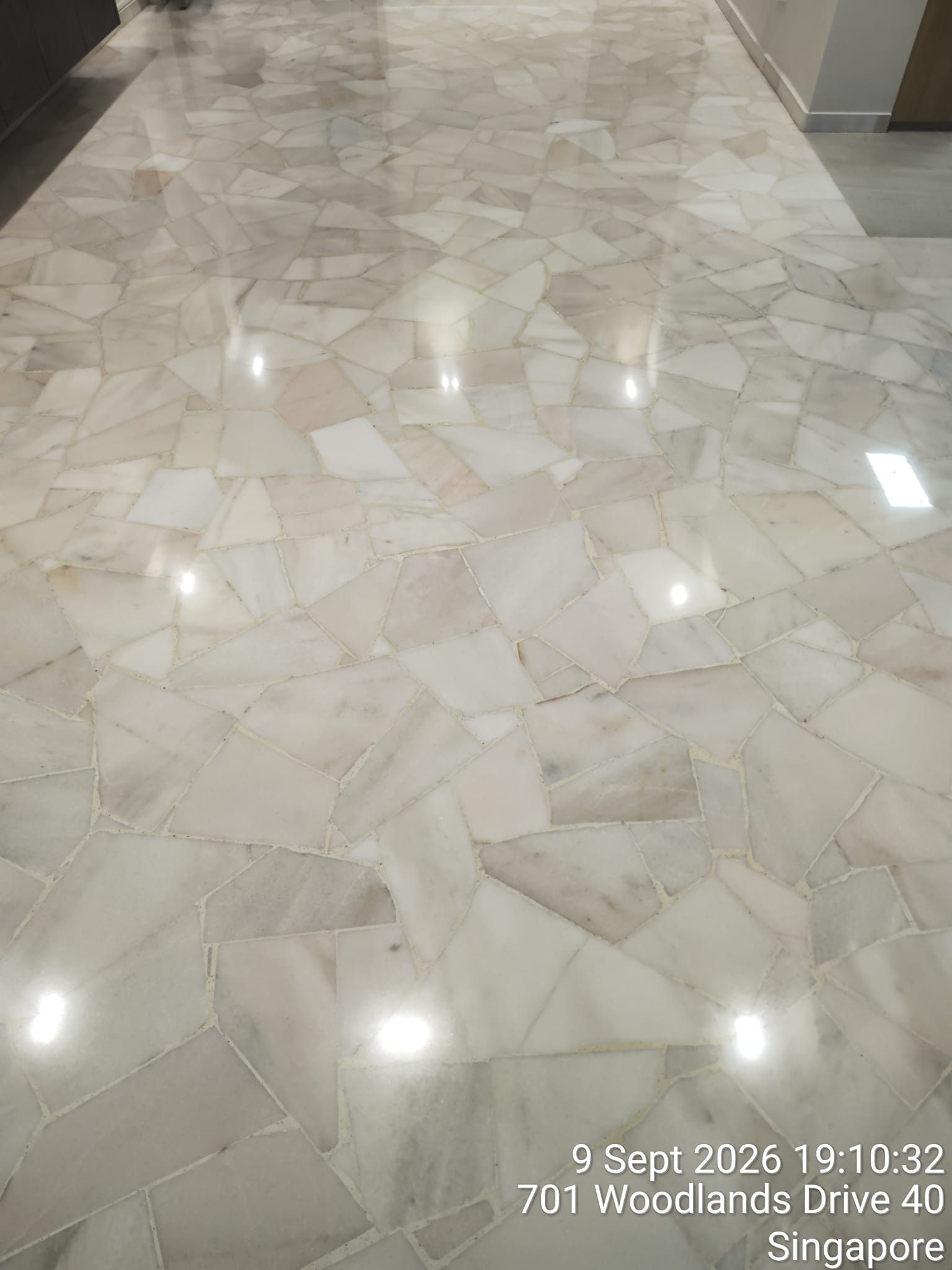
A restored high-gloss finish — Woodlands Drive
Unlike a single etch mark or stain, a floor that's uniformly dull across the whole room usually isn't the result of one incident — it's the cumulative effect of years of ordinary use.
What causes overall dullness
- Daily foot traffic gradually wearing down the reflective polish, especially along common walking paths
- Fine grit from shoes acting like sandpaper across the whole surface over time
- Humidity softening and clouding the finish, particularly relevant in Singapore
- The wrong cleaning chemicals used repeatedly, each pass slightly etching the surface
- Old wax build-up that's degraded into a hazy film rather than a shine
Because it happens gradually and evenly, whole-floor dullness is often mistaken for "just needing a good clean" — but if the reflective polish itself is gone, no amount of mopping will bring it back.
How it's fixed
A dull floor with no major localised damage typically doesn't need heavy grinding — honing through a few grit stages to refresh the surface, followed by a full polish or crystallization pass and a fresh seal, is usually enough to restore genuine mirror shine. Floors with scattered etching, staining or scratching underneath the dullness need those addressed first, which is why a proper on-site assessment matters more than a quoted price based on square footage alone.
How to tell the difference between "needs cleaning" and "needs polishing"
A simple test: if the floor looks noticeably better right after a thorough mop but fades back to dull within a day or two, that's a genuine polish problem, not a cleanliness one. Reflections should look sharp and clear on a properly polished marble floor — if window frames or ceiling lights appear as a blurry smear rather than a clean mirror image, the polish has worn through.
Keeping the shine longer
Regular dry dust-mopping to remove grit before it gets ground in, pH-neutral stone cleaner instead of generic products, and a re-seal every couple of years all extend the time between full re-polishes — but on a well-used floor, periodic re-polishing is a normal part of marble ownership, not a sign anything went wrong.